
Reilly renamed Sebo Stadium
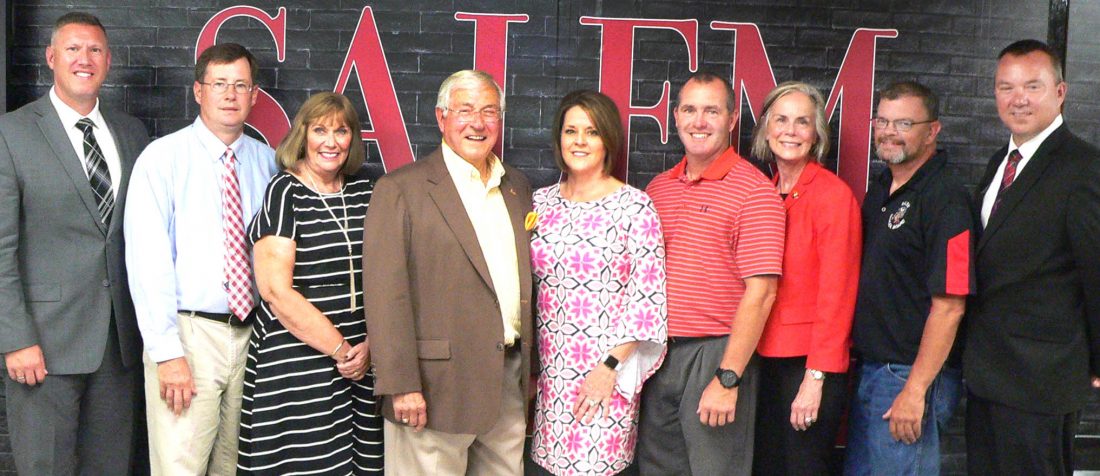
The Salem school board has approved a naming rights agreement with local philanthropist Bob Sebo, renaming the high school stadium Sebo Stadium in honor of his significant monetary donations during recent and future renovations at the facility. From left, school Treasurer Michael Douglas, board member Ted Bricker, board member Carol Hrvatin, Bob and Linda Sebo, board member Steve Bailey, board President LuAnn Haddad, board member Doug Moffett and schools Superintendent Sean Kirkland. (Salem News photo by Kevin Howell)
-

- The Salem school board has approved a naming rights agreement with local philanthropist Bob Sebo, renaming the high school stadium Sebo Stadium in honor of his significant monetary donations during recent and future renovations at the facility. From left, school Treasurer Michael Douglas, board member Ted Bricker, board member Carol Hrvatin, Bob and Linda Sebo, board member Steve Bailey, board President LuAnn Haddad, board member Doug Moffett and schools Superintendent Sean Kirkland. (Salem News photo by Kevin Howell)
-
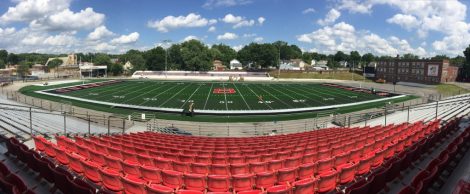
- Photo taken from Salem High School Athletics website, salemathletics.org.
The school board approved a naming rights agreement with Sebo, renaming the stadium Sebo Stadium. The agreement runs for 25 years, at which time the Sebo estate will have first opportunity to continue the name.
Board member Steve Bailey, Building and Grounds Committee chairman, said the agreement is in recognition of the more than $400,000 that Sebo has donated in the past and to current and future projects, including those at the stadium of a wall construction, renovations to the track and turf and this year’s updates to the press boxes and drainage. Sebo is also working with the board to obtain properties near the stadium to create a parking lot.
Bailey said Sebo has played a vital role in making the stadium one of the best in the state that will hopefully result in more playoff football games and other activities, meaning more money invested in the local economy and exposure for the community.
Admitting that there may be some negative response to changing the stadium’s historical name–it is named after Civil War Gen. James W. Reilly in honor of money from his estate used to purchase the property–Bailey said he thinks most people will understand, considering the practice of selling the naming rights of stadiums across the country, from professional to high school, has become commonplace.
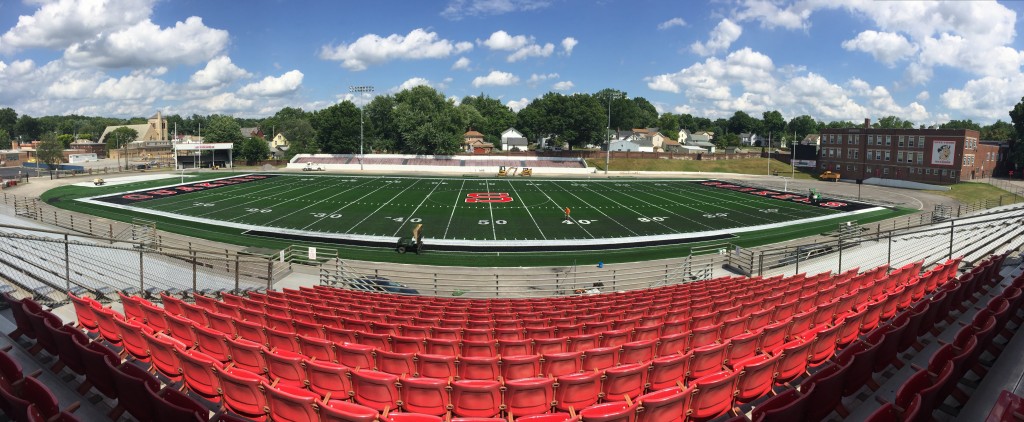
Photo taken from Salem High School Athletics website, salemathletics.org.
“It’s something that generates money to maintain the facilities,” Bailey said. “We’re lucky to have [Sebo] be from Salem and be able to make these upgrades without using school money.”
A 1954 graduate of Salem High School, Sebo was a member of the varsity football, varsity track and junior varsity basketball teams as well as a four-year member of the concert band. He served on student council and was junior class president.
“I was born and raised in Salem and I lost a lot of blood playing football on that field,” he said. “I have great emotion for Salem, particularly the school, and I’m very honored and very pleased that the school board has elected to name the stadium after me.”
At the school board meeting, Sebo thanked the board for allowing him to participate in the projects at the stadium and giving him “a legacy at a place I love. If you take my blood, it’s certainly red, but there is also black in there, too.”
The stadium was named after Civil War Gen. James W. Reilly, who did not have a will upon his death and his estate was divided among the Columbiana County school districts.
According to information posted at the stadium, the Salem school board purchased the property in 1915 for the $5,400 of its share of the Reilly estate. The stadium was expanded when Reilly School was built in 1928.
khowell@salemnews.net
Local News
EP woman pleads not guilty in animal cruelty case
LISBON — An East Palestine woman pleaded not guilty during arraignment Monday on four counts of prohibitions ...

Salem Summer Concert Series returns to Waterworth Memorial Park June 7
Beaver Local teacher suffers injuries in dog attack
LISBON — One of two dogs that attacked a woman out for a walk Friday at Lake Tomahawk was scheduled to be ...
Woman dies after Monday morning crash in Perry Township
PERRY TOWNSHIP (WKBN) — The Ohio State Highway Patrol is investigating a Monday morning crash involving a ...
Columbiana council gets update on building department
COLUMBIANA — The city’s decision to partner with a third-party service for its commercial and residential ...
Prosecutor: Candidates must take stand on death penalty
Gov. Mike DeWine recently announced he will give his position soon on the enforcement of the death penalty in Ohio, ...