
Overdoses strike team meets with county representatives
Trending
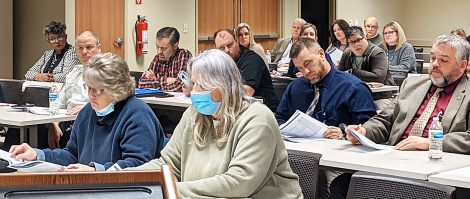
LISBON --The Columbiana County Mental Health and Recovery Services Board hosted a Community Conversation on Dec. 6 with the RecoveryOhio Overdose Strike Team to discuss ways to drive down drug overdose deaths in the county.
Representatives from a number of county organizations were in attendance, including health departments, law enforcement agencies, corrections and probation officers, the Prosecutor's Office, commissioners, Job and Family Services, substance use treatment providers, the Metropolitan Housing Authority, and Ohio Means Jobs.
The Overdose Strike Team was formed in response to data showing that only 23 counties, including Columbiana County, represent nearly 80 percent of total overdose deaths in Ohio. The Team includes representatives from the state Department of Mental Health and Addiction Services, Department of Health, the Medical Board, Pharmacy Board, and the Department of Public Safety. The Team is focusing on these counties to better understand the challenges they face, the tools and resources that are the most effective and most needed, and to build stronger local-state collaborations, in an effort to urgently drive down overdose deaths in Ohio.
The conversation with Columbiana County stakeholders was facilitated by Sarah Moore, RecoveryOhio's Community Response Manager, with other members of the Overdose Strike Team participating in the conversation via Zoom. She noted that overdose deaths in Ohio were the highest ever last year, particularly in May and June. Much of this is likely due to the pandemic, as anxiety, stress, and depression may have led people to turn to substances to cope.
Alisha Nelson, Director of RecoveryOhio, explained that the Strike Team is focusing on three areas throughout these conversations: reducing the supply of drugs through interdiction; expanding harm reduction efforts; and, expanding access to treatment. Recognizing the prevalence of poly-drug use, Nelson said any approaches and solutions to bringing down overdose deaths must be holistic, rather than focused on only opioids.
Jolene DeFiore Hyrmer of the Ohio Department of Health presented data from a drug overdose profile prepared for Columbiana County. Data from the Bureau of Vital Statistics, which examines death certificates, shows that 46 people from Columbiana County died from unintentional drug overdoses in 2020, up from 40 deaths in 2019. Fentanyl continues to be the most predominantly fatal drug, with cocaine, psychostimulants, heroin, benzodiazepines, and natural and semi-synthetic opioids also found in toxicology reports. The highest number of overdoses are occurring among residents of East Liverpool (28) and Salem (13). It is important to note, she said, that there has been a sharp increase in the number of females dying of overdose, indicating a need to drive efforts toward that population. Data also found that in 64 percent of fatal overdoses, there was at least one opportunity for intervention.
Regarding interdiction, law enforcement representatives present were in agreement that more effort needs to be made to intercept the drugs that are coming into the country at the Mexican/American border. An abundant supply drives down the price of illicit drugs, making them more affordable and accessible, thereby increasing use. The local justice system can catch and prosecute low-level drug user and sellers, but cracking down on higher-level drug traffickers who are bringing drugs into the area needs to be a priority. Nelson confirmed that the border activity is an area of concern, and Governor Mike DeWine has traveled to the border to discuss with the Administration ways to improve border security.
Representatives from the Prosecutor's Office noted they would also like to see a state tracking database for "Overdose Immunity Forms," which enable an individual who has overdosed to have immunity for drug charges up to two times if they seek treatment within 30 days. While a good idea meant to encourage calls to 911 in the event of an overdose, there is no collection point for these forms, so there is no way of knowing if the person has been given immunity previously in another jurisdiction.
A Drug Task Force representative noted that many of the counties where 80 percent of overdoses have occurred seem to have three things in common: they are rural areas with a lack of uniform law enforcement; a lack of in-patient long-term residential treatment; and, a lack of homeless shelters. Increasing availability of such facilities and services could positively impact the overdose death rates.
Regarding harm reduction efforts, it was noted that the county Project DAWN program distributed more than 1,200 naloxone kits during the past 11 months. This overdose-reversing medication is available free of charge to anyone. Project DAWN conducted a "naloxone blitz" in the 43920 zip code area earlier this year, based on state data that showed a high number of overdoses occurring in that area. During this targeted distribution, several businesses were approached about keeping naloxone on hand in case of emergency, and many declined. In addition, the CCMHRS Board has purchased a "Nalox Box" offering naloxone on demand, but no facilities have expressed a willingness to house the box at this time. Alisha Nelson noted that the Ohio Hotel and Lodging Association has developed a protocol for keeping naloxone on hand in hotels and offered to share that information with local hotels.
With regard to access to treatment, law enforcement and providers shared that having a peer supporter on hand to talk to individuals who are experiencing a substance use crisis has been helpful. A pilot program launched in Salem this year partners a peer supporter with police, and this link has been helpful to get individuals into treatment immediately. Funding to continue and expand these programs is important. Providers also noted that homeless diversion is needed, and the fact that individuals are no longer required to maintain treatment to receive public assistance for housing is a problem, as many discontinue treatment before they are ready once they have a place to live. They added that funding for non-traditional recovery supports, like cell phone minutes, would be helpful to keep them engaged with clients.
Carol Baden of Recovery Ohio reported on new and emerging resources, including the Encompass training which was launched this spring across the state. This eight-hour training helps families and individuals learn more about addiction and the best ways to help someone with substance use issues. She said more than 1,600 families and individuals have received this training since April, and more sessions are planned.
The most recent state budget allows for the creation of Overdose Review Boards and Suicide Review Boards in counties. Marcy Patton, CCMHRSB Executive Director, said Columbiana County officials are planning to establish these boards in the upcoming year. Review of deaths by overdose and suicide will allow the county to identify any possible trends and gaps in services which can then be addressed in service planning efforts.
Aimee Shadwick of RecoveryOhio shared that they have launched a massive educational campaign across the state, "Beat the Stigma." This includes the creation of a website and numerous advertisements that are appearing frequently.
The information gathered by state officials during this meeting will be shared with the appropriate departments and taken into consideration when planning for future prevention, treatment and recovery efforts to drive down overdoses.
If you would like to become more involved with the Overdose Strike Team or would like information about these and other initiatives aimed at reducing overdose deaths, please contact Jennifer Whitman at the CCMHRS Board at 330-424-0195.
-- Submitted material