
Improvements continue at Salem wastewater treatment plant
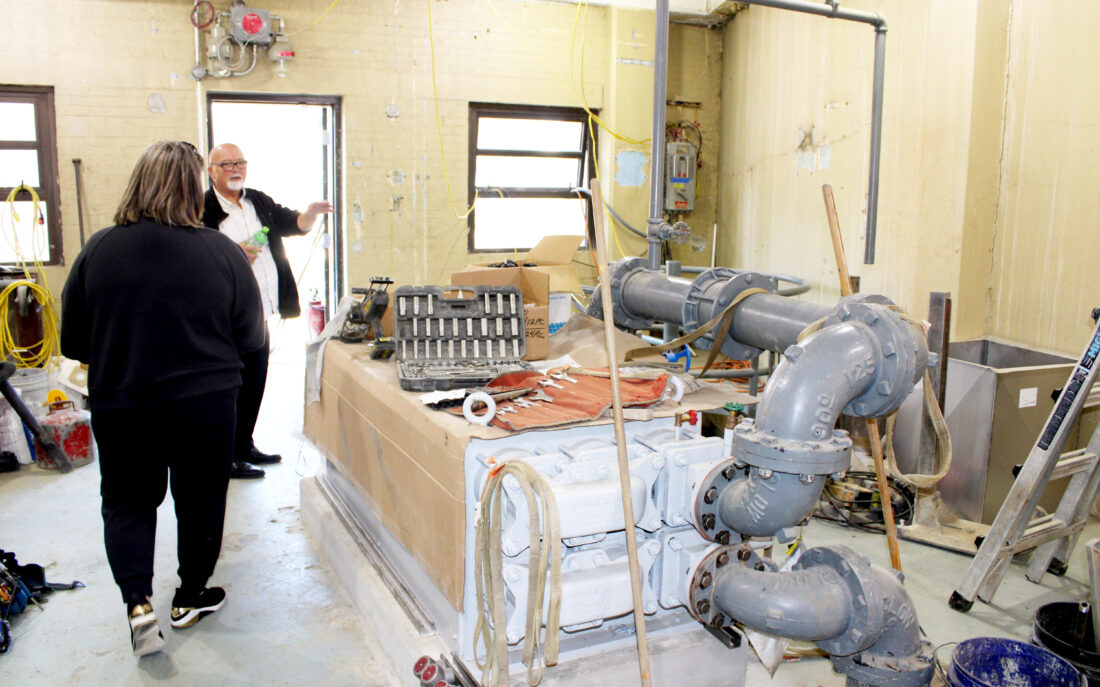
Utilities Superintendent Butch Donnalley leads a tour of the wastewater plant to councilwoman Sara Baer. (Photo by Morgan Ahart)
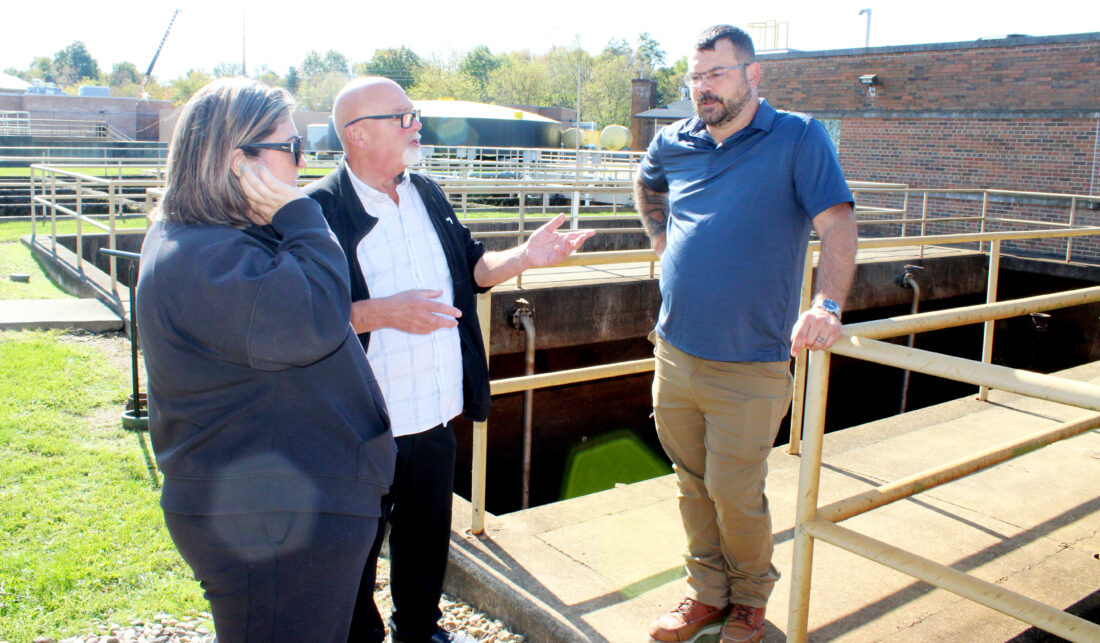
Assistant Superintendent Chad Hess, right, and Utilities Superintendent Butch Donnalley, center, show City Councilwoman Sara Baer the plant’s headworks building which serves as the primary entry point for material from the city and provides preliminary treatment and forces incoming material through a screen to remove any foreign material. (Photo by Morgan Ahart)
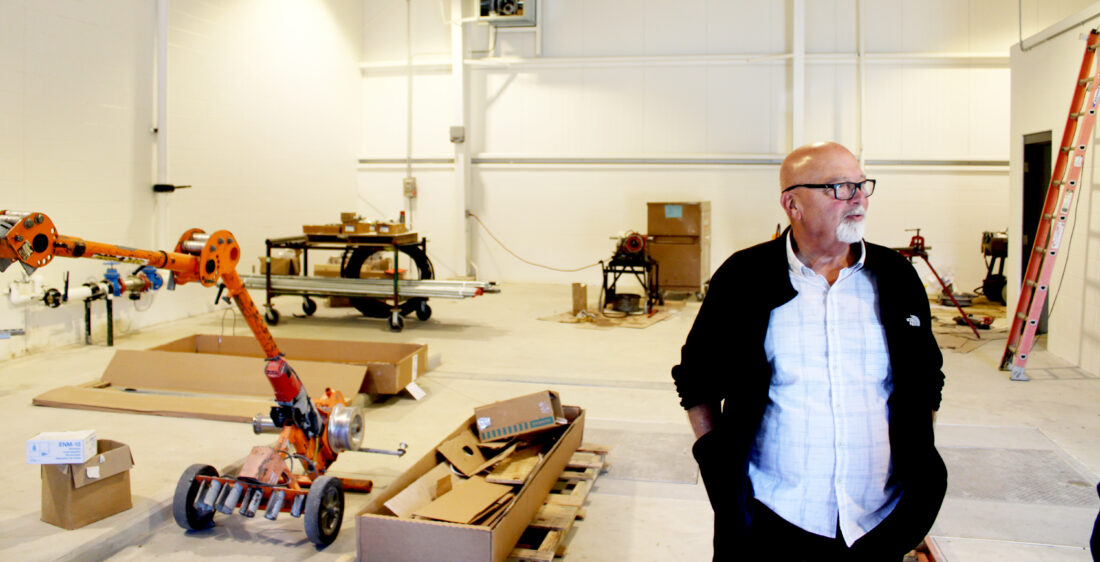
Another new addition to the plant is a dedicated sludge treatment building which will eventually house a centrifuge, and which will remove water from the concentrated sludge and decrease the department’s disposal expenses as the cost to haul away sludge is calculated by the ton. Utilities Superintendent Butch Donnalley shows it off. (Photo by Morgan Ahart)
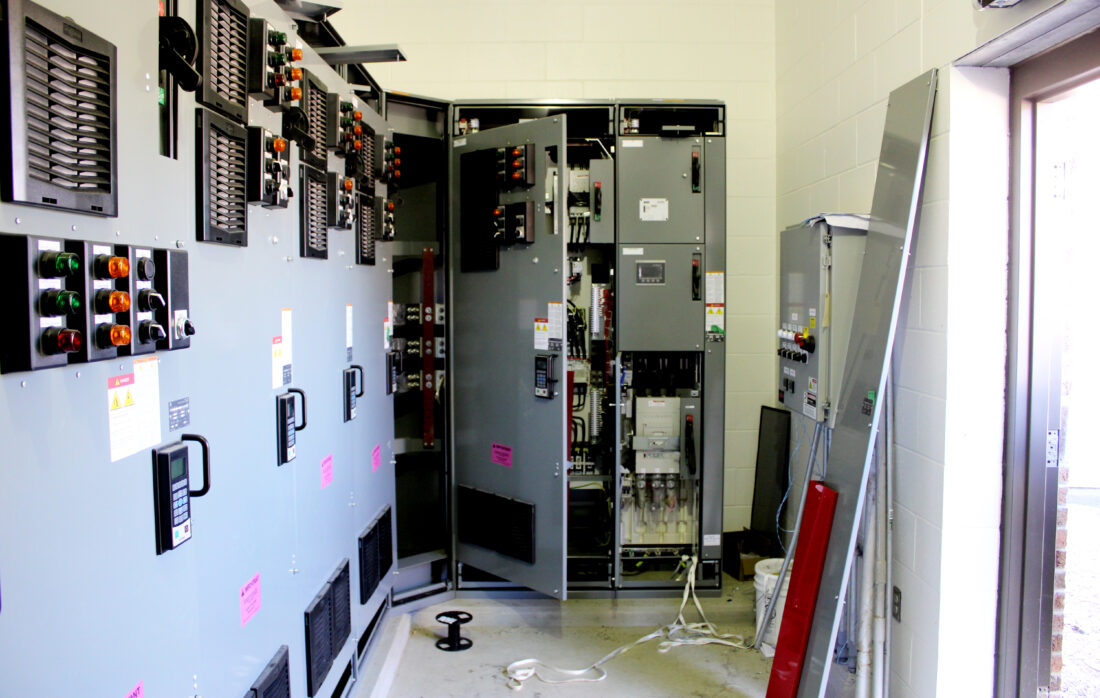
One of the primary innovations being introduced to the plant is the state-of-the-art pondus filtration system which Donnalley said would “put the plant on the map,” as only the second plant in the nation to implement the system. (Photo by Morgan Ahart)
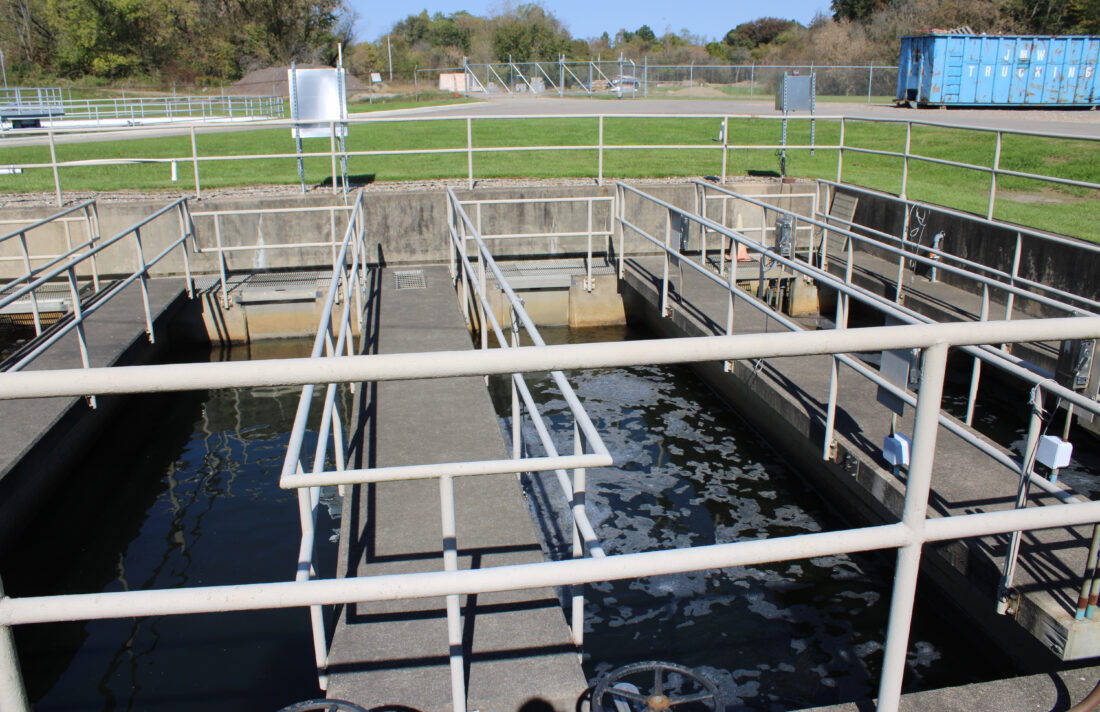
Photo by Morgan Ahart
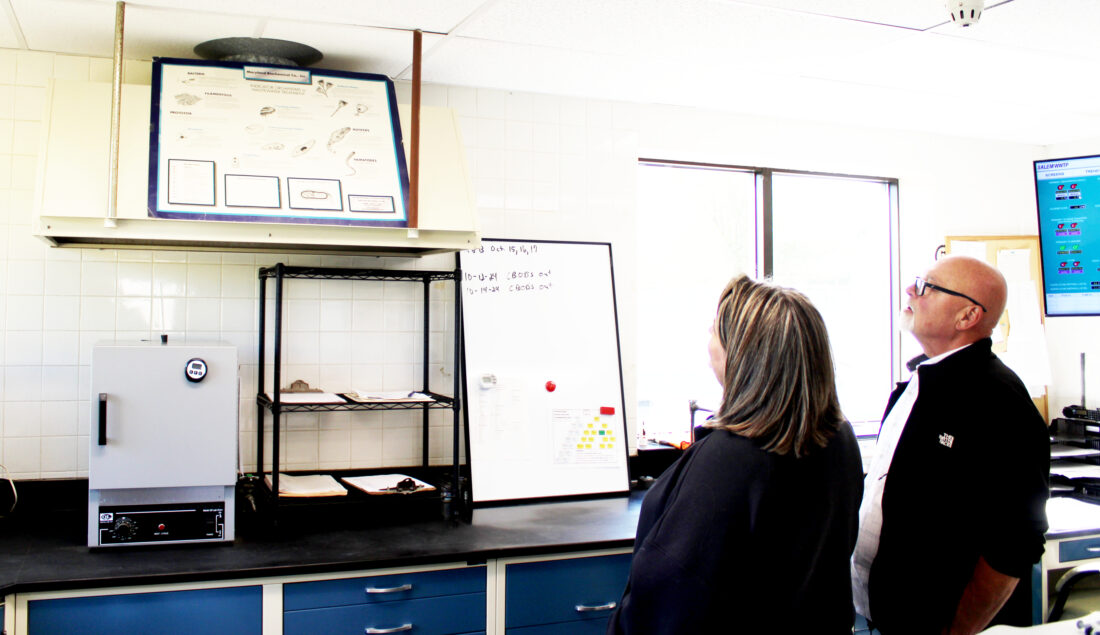
Utilities Superintendent Butch Donnalley explains the different types of organisms which are found in wastewater material and what information their presence can indicate about a given batch of material and how it should be treated. (Photo by Morgan Ahart)
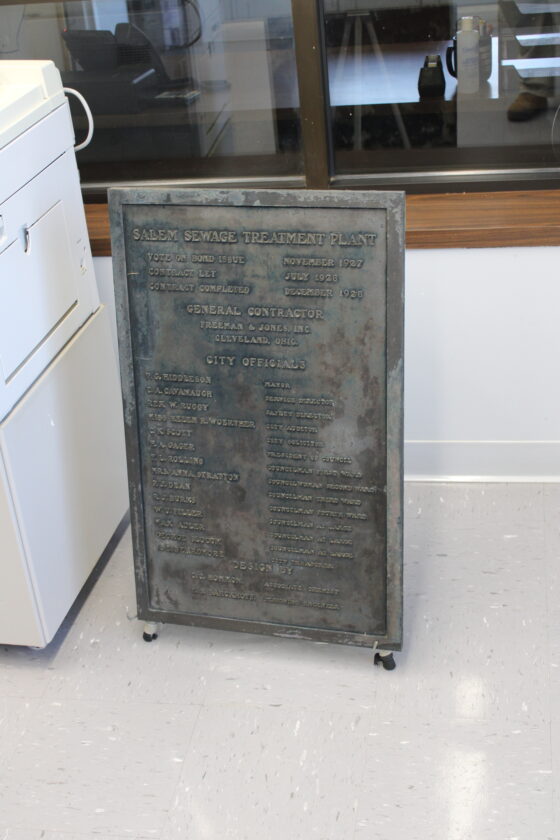
As renovations are completed the Utilities Department has maintained an emphasis on retaining and celebrating the plant’s historic features, preserving the original entryway and plaque from 1928 for posterity. (Photo by Morgan Ahart)
Utilities Superintendent Butch Donnalley leads a tour of the wastewater plant to councilwoman Sara Baer. (Photo by Morgan Ahart)
Assistant Superintendent Chad Hess, right, and Utilities Superintendent Butch Donnalley, center, show City Councilwoman Sara Baer the plant’s headworks building which serves as the primary entry point for material from the city and provides preliminary treatment and forces incoming material through a screen to remove any foreign material. (Photo by Morgan Ahart)
Another new addition to the plant is a dedicated sludge treatment building which will eventually house a centrifuge, and which will remove water from the concentrated sludge and decrease the department’s disposal expenses as the cost to haul away sludge is calculated by the ton. Utilities Superintendent Butch Donnalley shows it off. (Photo by Morgan Ahart)
One of the primary innovations being introduced to the plant is the state-of-the-art pondus filtration system which Donnalley said would “put the plant on the map,” as only the second plant in the nation to implement the system. (Photo by Morgan Ahart)
Photo by Morgan Ahart
Utilities Superintendent Butch Donnalley explains the different types of organisms which are found in wastewater material and what information their presence can indicate about a given batch of material and how it should be treated. (Photo by Morgan Ahart)
As renovations are completed the Utilities Department has maintained an emphasis on retaining and celebrating the plant’s historic features, preserving the original entryway and plaque from 1928 for posterity. (Photo by Morgan Ahart)
Trending
As improvements continue at the wastewater treatment plant, the facility continues to increase its sophistication, adding state of the art systems and improving efficiency. Utilities Superintendent Butch Donnalley, said that as wastewater technology continues to advance the education required for Class Two and Three Operator certifications are comparable to third and fourth year coursework for a conventional STEM major, while Assistant Superintendent Chad Hess said that Class Two and Three certification were roughly comparable to a bachelor's or master's degree respectively while a Class Four certification was more comparable to a doctorate. Donnalley said that the plant serves over 6,000 people and that its infrastructure runs 24/7.