
Trending
LISBON -- If you plant them they will come.
Milkweed, that is! Milkweed and Monarch butterflies have an essential connection because the monarchs only lay their eggs on the leaves of the milkweed plant. The eggs hatch into caterpillars that eat the leaves for nourishment. Milkweed is the only host plant of the monarch and serves as a nectar source for many other butterflies and pollinator insect species. The University of Florida sites an estimated decline of 80-90% in the monarch butterfly population over the past few decades, giving to concern about the plight of these magnificent insects.
Milkweed is in the genus Asclepias, derived from the Greek god of medicine and healing – Asklepios. Of the 130 species in Asclepias, eleven varieties grow wild in our area. Three of the most common are butterfly weed (Asclepias tuberosa), common milkweed (Asclepias syriaca), and swamp milkweed (Asclepiias incarnate).
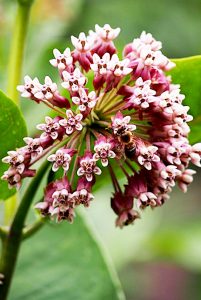
Common milkweed is the most well- known milkweed and flourishes in full sun to partial shade in average to well-drained soil. It spreads by underground rhizomes and grows 4 to 6 feet tall. It blooms June-August and has large clusters of fragrant pink spherical flowers. The large leaves, covered with short woolly hairs on the undersides, rest on a single stalk.
Butterfly weed thrives in full sun in dry to medium soil. It is drought tolerant and reaches 1 to 3 feet tall. The bright orange flowers bloom in late summer. When stems are broken, the sap is not milky as in other varieties. Butterfly weed grows in more of a clump-like formation.
Swamp milkweed does best in wet soil with full sun to partial shade and reaches heights of 4 to 5 feet. The 3 to 6 inches leaves are lance-shaped and the mauve to pink to purple flowers bloom throughout summer.
Milkweed seeds are easy to grow. If you have the seeds in autumn or early winter, they can be sprinkled around the garden. Burying the seeds in fall can reduce germination because they need light to germinate. Just drop seeds on the ground and press them gently with your hand. The seeds will germinate and begin to grow in spring. Seedlings can be transplanted when they are a few inches tall.
Keep new plants watered until well established.
There are several options for planting milkweed seeds in spring. However, seeds must go through a process of stratification to germinate. Cold stratification is the process of subjecting seeds to both cold and moist conditions to break dormancy. You can do this in your refrigerator using one of the following options:
1. Place seeds in a damp paper towel inside a sealed bag and put in the refrigerator for 30 days. To avoid damage, use a low-traffic area of your fridge, such as the vegetable drawer or tape to the bottom of a shelf. After this, sow directly in the garden covered by soil. Thin to 12 inches.
2. Put seeds into a moist seed starting mix in peat pots and cover with soil. Protect with clear wrap and refrigerate for 30 days. After this, move to a warm area to germinate. Keep moist. After germination, remove cover and provide either natural or artificial light. If the plants get leggy, they need more light. At around 3 inches, transplant peat pots into the garden. Make sure the top rim is covered in soil. If not, it can wick away moisture from the roots. Plant in full sun after danger of frost and water until established.
3. Combine seeds with an equal or greater amount of damp sand, perlite, vermiculite, or other sterile media. It should not drip when squeezed. All seeds should be in contact with the damp media during the cold stratification process and should be stored in a container or plastic bag in the refrigerator for 3-4 weeks. Then, sow directly in the garden and cover with soil. Or, fill pots or trays with light, well- drained soil and add seeds. Cover with soil and keep moist.
Place in a sunny warm spot or under grow lights. After danger of frost, and when plants have four true leaves, they are ready to be planted outside.
If you are concerned about the plight of the monarchs, plant milkweed this year. It is so much fun to watch your new plants grow, but is even more fun and amazing to see the monarch butterflies that you have attracted to your milkweed! It is also very rewarding knowing that you have contributed to the reproduction and development of this species for years to come!
Milkweed is a perennial plant (comes back each year) and may or may not bloom the first season.
OSU Extension has packets of Common Milkweed seeds available. Just call or stop in for details. A $2 donation is suggested for a pack of approximately 65-70 seeds. The extension is located at 7989 Dickey Dr. Lisbon. Call 330-424-7291 for information about helping the monarchs - http://go.osu.edu/monarchhelp. For information about growing milkweed - http://go.osu.edu/growmilkweed.