
Columbiana County’s economy and industries influenced by its original land and resources
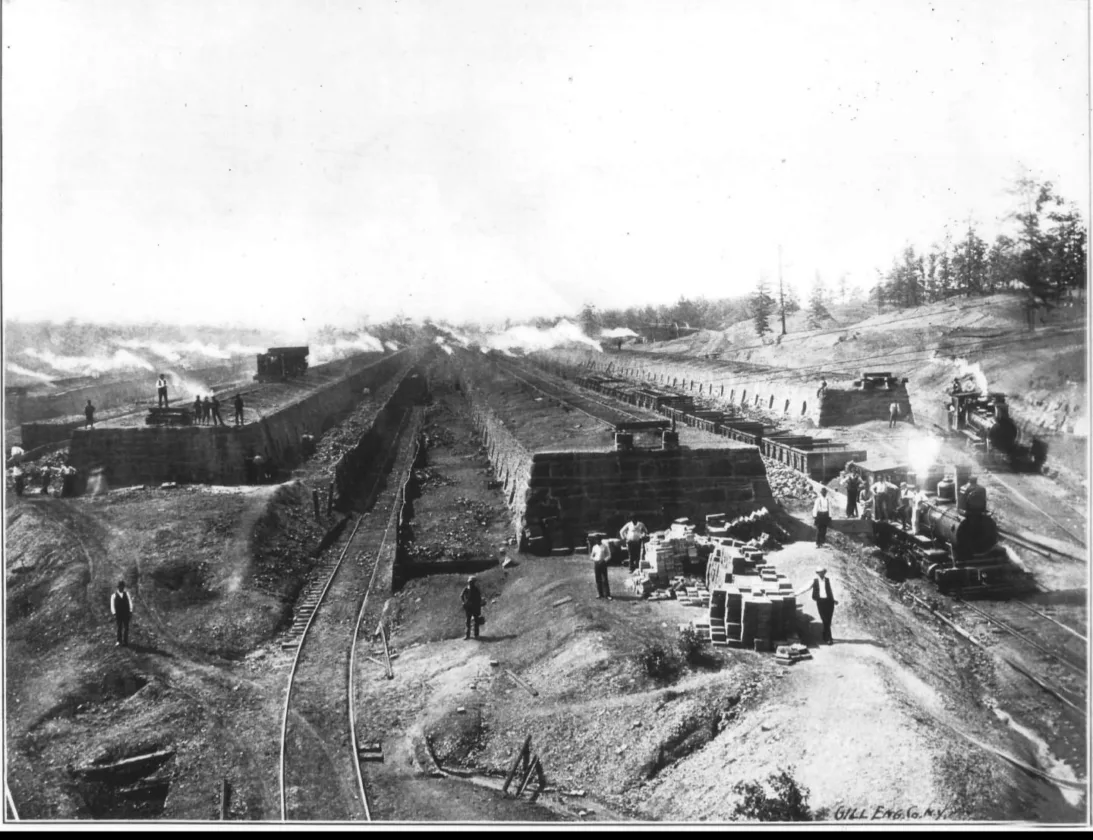
Coke ovens of the Leetonia Iron & Coal Co, Leetonia
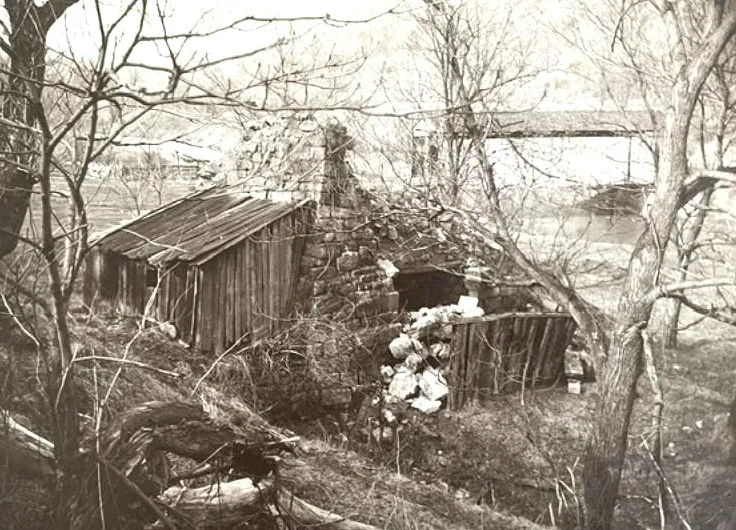
Rebecca Furnace, Lisbon
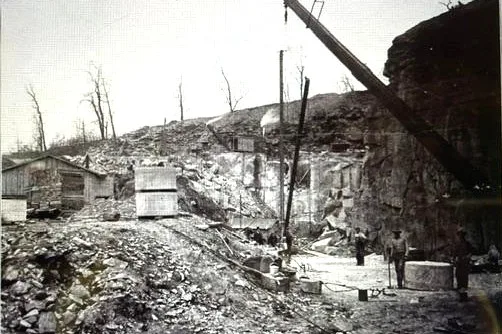
The Smallwood-Low Stone Co., Lisbon (from “Geology of Columbiana County” by Stout & Lamborn, p. 184)
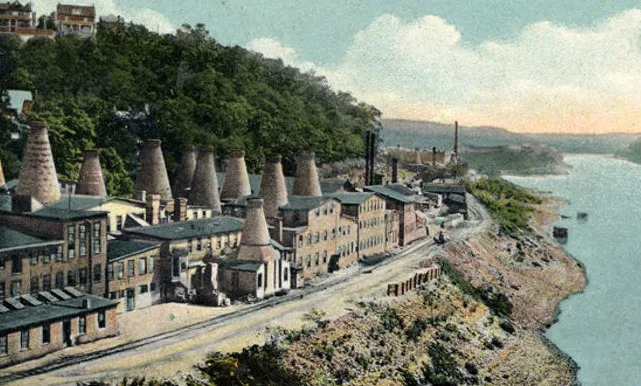
The Thompson Pottery, East Liverpool
Coke ovens of the Leetonia Iron & Coal Co, Leetonia
Rebecca Furnace, Lisbon
The Smallwood-Low Stone Co., Lisbon (from “Geology of Columbiana County” by Stout & Lamborn, p. 184)
The Thompson Pottery, East Liverpool
Trending
The land and resources that were here when Columbiana County was formed in 1803 influenced how its economy and industries developed.
At the end of the Paleozoic period, about 400 million years ago, the land that is now Ohio was a huge sea that was being filled by sediment washed westward from growing mountains. The Appalachians were in their infancy and were as high and rugged as the present-day Himalayas. The rivers flowing off them were making wide deltas as they entered the seas. Ohio was close to the Equator, and the climate was warm and tropical. The delta silts and sands built up a wedge of land, covered with forests and shallow swamps. The rivers would be choked by that sediment and spill over into the adjacent seas. The area was covered by water and marine sediment replaced the land. The coal swamps covered an area that included Ohio as well as Indiana, Pennsylvania, West Virginia and Kentucky. Thick layers of peat from the swamp forests were compacted to form bituminous coal. It takes about 10 feet of peat to form one foot of coal. The roots of the tropical forest contributed to extensive leaching and formation of clays. The result was a layer of coal, and the underclay beneath it, overlying the swamp silts and sands, and underlying marine deposits including clays and limestones. The coals and clays are historically the most valuable rock resources in Columbiana County, but also important were the sandstones, limestones, and iron ores.
Coal
In Columbiana County there are at least 600 abandoned coal mines known, with 83 in Center Township alone. Beginning in 1917, the deep mines were joined by surface mines. The total production of coal in the county is cumulatively more than 96 million tons. Mining began in 1803, with the modest amount of 100 tons produced, probably used mainly for heating. Originally industries that needed heat, such as iron furnaces and cement and brick kilns, used wood and charcoal as fuel, but as the forests were depleted it became important that there were local sources of coal. Ours is a good grade of bituminous coal, suitable for manufacturing processes as well as powering steam engines and heating homes and businesses.
The original underground mines accessed the coal by a vertical shaft or directly into the side of a hill. The seams were thin, often only a few feet thick. Miners spent their days bent over in the low tunnel, shoveling coal into carts. They were paid by the amount of coal they mined each day. Originally men hauled the carts but later a variety of animals were used, including dogs, goats, horses, and mules. In the larger mines, animals were eventually replaced by steam engines that also powered ventilation fans and electric lights.
Clay
The underclays of the coal range in thickness and quality, but many in Columbiana County are quite thick and high in quality. Sometimes the clay was mined along with the coal, that made a convenient fuel source for the kilns necessary to fire the clay into usable products like building or paving brick, drainage tile, as well as fine pottery, stoneware, and ceramics. In the early 1800s, brick was used extensively for homes and businesses because it was resistant to weather and fire. The first record of local brick in Columbiana County was in 1806, when the Salem Friends built a church building of locally produced brick. Early kilns were often constructed at or near the site producing bricks where they were needed. In some places a clay-rich soil was simply dug at the site, molded and dried, then baked.
Near East Liverpool, several underclays occur. Beginning in 1839, a brisk pottery industry developed. According to the "History of Columbiana County, 1879" In that year alone there were 23 potteries in East Liverpool operating 67 kilns. In addition to East Liverpool, other towns in the county had potteries including Salem, East Palestine, Alliance, Lisbon, Wellsville and Sprucevale.
Sandstone
The Pennsylvanian deltas began as streams carried sand from the towering Appalachian Mountains. In the streams the sand was sorted out, with the finer silts and clays carried away. The result was a wedge of nearly pure sand, sometimes still showing original ripple marks. The Freeport sandstone is one of these. It is exposed along the valley of Middle Fork of Little Beaver Creek. It is resistant to erosion and tops the cliffs in many places near Lisbon. The jumble of rocks at the north end of the county fairgrounds is one, as is the quarry along the path to Lusk's Lock.
The county courthouse, the Lisbon train station, the McKinley home and numerous canal locks are built of this sandstone. The stone was also used to make whet stones and a variety of grinding stones including large wheels used to pulp wood to make paper. Cliffs of the material are visible in a quarry near Logtown, known locally as Kerestes Cliffs.
Producing stone block was originally done by hand. Beginning in the mid-1800's it was aided by steam power. Working from the top of the cliff, a series of drill holes were made, then packed with explosives. The topmost material was usually wasted. The thick blocks were then removed carefully and trimmed to correct size. For pulpstones, the corners of the blocks were knocked off. The quarry is reported to have produced as much as 1,500 stones annually, shipped all over the world. Production ceased by 1930.
Iron Ore
Rebecca Furnace first produced cast iron in 1808. The original owner, Gideon Hughes, named it Rebecca after his wife. It was located along the path of Middle Fork, Little Beaver Creek, near the corner of Logtown Road and Furnace Road, now called McKinley crossing, after the furnace manager, James McKinley the president's grandfather. A foundry was about two miles north of the furnace, and there was a dedicated railroad running west of the creek between the two facilities. Nails and other cast iron products were made at the mill.
The furnace used Black Band iron ore, a thick layer of pure iron carbonate mined just north of the furnace, as well as "Kidney Ore," nodules of rust-colored iron from marine shales. These ores were prevalent in the stream sediments along Middle Fork, where they were sorted by hand. Most of the materials to construct the furnace as well as the raw materials for the blast were mined locally. The fuel was originally hardwood charcoal, cut and processed in local forests. About one acre of forest was consumed per day. A mixture of iron ore and locally quarried limestone, together with fuel, was loaded into the furnace from the top, and a blast of air introduced to encourage the reduction of iron to its pure form. The heavy iron flowed out into a series of channels and branches, which resembled a sow suckling her piglets hence the name pig iron. The impurities floated to the top and hardened to a slag product often used as road base. The Rebecca furnace ceased operation in 1832 having been destroyed by a flood.
Limestone
Limestone was an essential part of making cast iron, and later steel, but also important as a building stone, a source of concrete and cement, and an agricultural product. The Vanport limestone is still quarried in eastern Mahoning County. A kiln west of Lisbon produced hydraulic cement from locally mined limestone for more than a hundred years, from the time of canal lock construction in the 1830s until it ceased operation in the 1940s.
Steel and Coke
Other iron furnaces in the area were in Youngstown and along Yellow Creek. After a few years the forests were depleted and local coal replaced charcoal. The additional sulfur in the coal was not well extracted by the local limestones. The result was a brittle iron. Eventually, the furnaces switched to iron ore from other areas and to coke, that shifted production from cast iron to steel.
The town of Leetonia was founded by William Lee in 1869 because of its proximity to local coal and limestone and at the crossroads of two railroads that could bring in needed supplies and ship products. The coke ovens lie along Cherry Valley Run, a tributary of Middle Fork. Initially the ovens supplied a local steel mill and produced coke for Youngstown steel mills. At its height there were 200 separate ovens. The ovens were loaded with coal from the top and high temperatures drew off coal gases, yielding a product with a higher carbon content, ideal for making steel. Cherry Valley got its name from the glow in the sky when the ovens were operating.
This monthly column is provided by the Lisbon Historical Society. This submission was written by Cheryl Mattevi, retired adjunct professor of geology at Kent State University/Salem.