
K-9 of Civil War soldier serves as reminder of role animals played in conflict
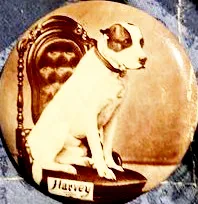
Harvey
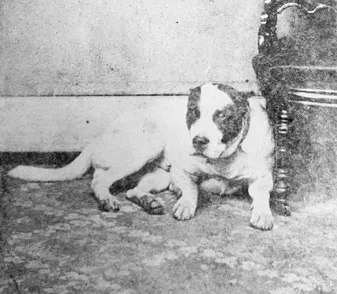
Harvey
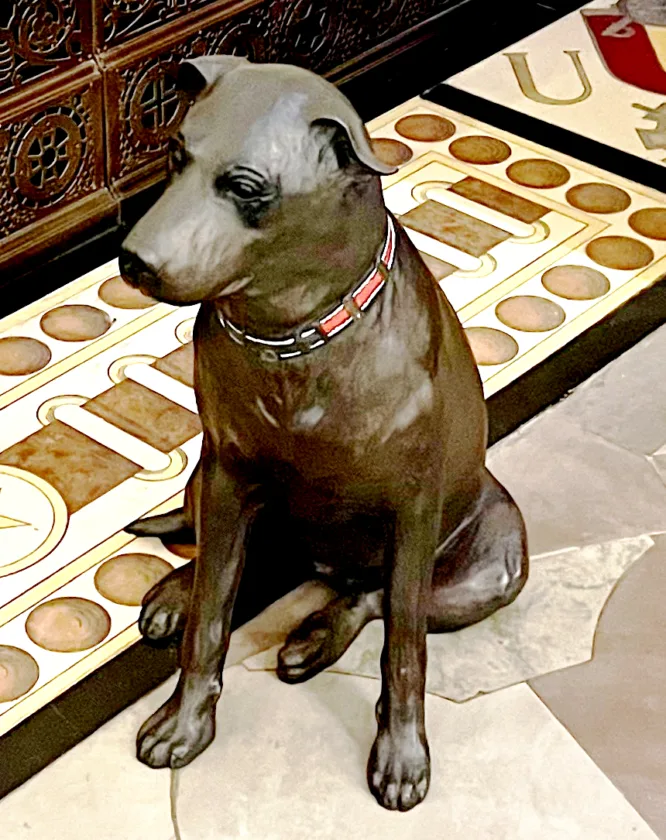
Bronze statue of Harvey in Cleveland’s Cuyahoga Soldiers’ and Sailors’ Monument.
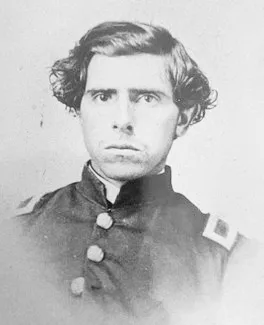
Lt. Daniel M. Stearns, Harvey’s owner.
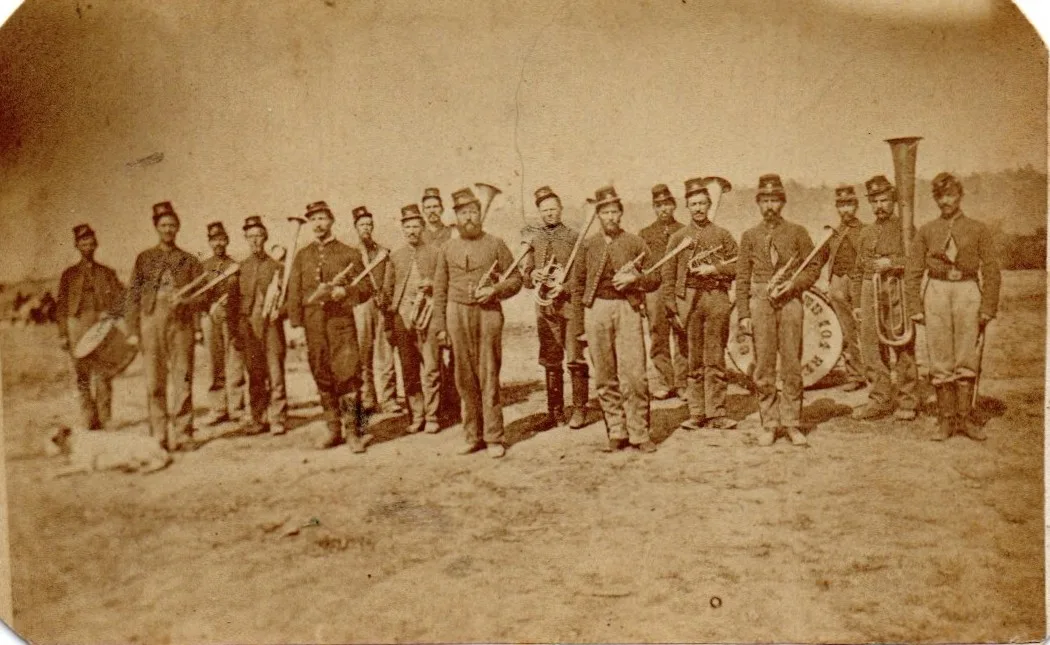
Harvey (lower left) poses with the 104th Regiment Band
Harvey
Harvey
Bronze statue of Harvey in Cleveland’s Cuyahoga Soldiers’ and Sailors’ Monument.
Lt. Daniel M. Stearns, Harvey’s owner.
Harvey (lower left) poses with the 104th Regiment Band
Trending
While perusing photos and documents of the soldiers of the Civil War, it becomes evident that not all participants of the conflict were of the human species. Four-legged veterans did not qualify for pensions and so their histories are difficult to uncover.
However, one canine "volunteer" attracted considerable notice during his service. Harvey, a bulldog, went to war with the 104th Ohio Volunteer Infantry late in the summer of 1862. The 104th was recruited in the northeastern corner of Ohio with four of its companies hailing from Columbiana County. The other six companies came from Stark, Portage and Summit counties. Command of the 104th went to a Wellsville attorney and former state representative, James Reilly, a colorful and profane son of Irish immigrants who came to Columbiana County during the canal-building boom.
Wellsville provided the recruits for what was to become Company F. One of the volunteers was 23-year-old Daniel M. Stearns who earlier served nearly 14 months as a lieutenant in the 8th Regiment of Pennsylvania Reserves before resigning due to a "dislike of the commanding officer." Stearns shared his earlier service with his dog, Harvey, who according to one source was wounded during the Peninsula campaign.
Shortly after the 104th was mustered in, the regiment was rushed to defend Cincinnati that was under threat because Kirby Smiths' Confederate army had advanced into Kentucky. The Buckeyes suffered a handful of casualties, including one fatality, in a small skirmish with the enemy advance guard. It was the only blood spilled in the defense of Cincinnati.
By November of 1862, Stearns had been promoted to 2nd Lieutenant and Harvey was sporting a special leather collar with an attached brass plate stating, "I am Lieutenant D.M. Stearn's dog; whose dog are you?"
Harvey and the men of the 104th spent a long year marching the dusty roads of Kentucky and east Tennessee before eventually participating in the capture of Cumberland Gap and the defense of Knoxville. After Longstreet's failed siege, the regiment spent a bitter and ill-provisioned winter at Strawberry Plains, a period compared by many in the unit to Washington's sojourn at Valley Forge.
On Feb. 14, 1864, Capt. William Jordan of Lisbon's Company K wrote home to his children describing the various pets accumulated by the regiment. Harvey and another dog named Colonel were described as "veteran soldier dogs" who "go in any of the tents that they want and lay down at night or stand with the sentinels on guard." A third dog, Teaser, had been acquired earlier in 1864. It is perhaps not surprising that some referred to the 104th Ohio as the "Barking Dog Regiment."
Lt. Col. Oscar Sterl was the proud owner of a pet squirrel which had the run of the camp and would even "nibble at the ears" of Harvey and Colonel. Teaser, not knowing of the squirrel's status as a pet, charged but was stopped by Harvey who carefully grabbed the squirrel in his mouth and carried it to safety. Capt. Jordan reported that the rescue proved unsuccessful as the squirrel died of fright shortly afterward. Additional animals in the 104th menagerie included two raccoons and another squirrel that was kept secured by a tiny chain.
The Ohio regiment participated in the Atlanta campaign as part of the 23rd Army Corps. Near Kennesaw Mountain, Harvey was wounded and captured. The next day, still defiant, he was returned under a flag of truce. From that point on, Harvey was the favorite pet of the regiment.
On Nov. 18, 1864, Pvt. Adam Weaver of Company I wrote to his brother back in Ohio that "Old Harvey" had paid him a visit while on picket. Weaver speculated that perhaps he smelled more like a dog than the boys of Company F. Weaver also recounted that during the soldier's campfire singalongs, Harvey would bark and move side to side. Weaver explained, "... my idea is that the noise hurts his ears, as it does mine!"
Less than two weeks later, Harvey survived the bloody battle of Franklin, TN, where the 104th held a crucial position east of Columbia Pike. Pvt. Weaver wrote home that Harvey was present with Company F throughout the slaughter of the Confederate assault columns. The 104th, although protected by their hastily constructed breastworks adjacent to the Carter cotton gin, still suffered 60 casualties. The regiment captured 11 enemy battle flags during the fight, a number not known to be equaled on any field by any other regiment. Six men of the 104th received the Medal of Honor for their actions.
Harvey's location during the subsequent battle at Nashville is not known, but his owner, Lt. Stearns, served as an aide to now Brig. Gen. Reilly. Stearns suffered a severe injury when his horse fell while jumping a Confederate entrenchment. Afterward, with Hood's army no longer a threat, the 104th was transferred to North Carolina. Stearns finished the war as captain of his original Company F. Harvey's post war career is not recorded, although an 1886 reunion photo shows an oil painting of the combat canine being proudly displayed by the veterans. Capt. Stearns finished his life confined in a Northern Ohio insane asylum where he died in 1890.
Harvey was honored in October 2019 with a bronze life-size statue in the Carter House Museum in Franklin, Tenn. In May 2025 a statue of Harvey was enshrined in Harvey's Garden at the Cuyahoga Soldiers' and Sailors' Monument in Cleveland's Public Square.
This monthly column is provided by the Lisbon Historical Society. This submission was written by Timothy R. Brookes of the East Liverpool Historical Society. His email is timothybrookeslaw@gmail.com.