
Officers train for crisis intervention
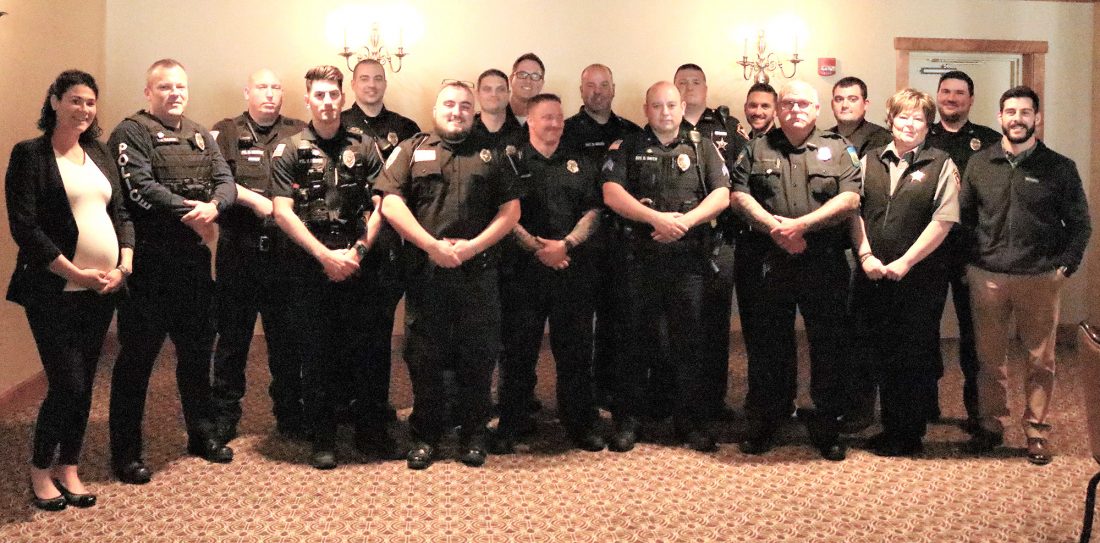
After training together all week, police officers, a dispatcher, a certified peer supporter and the CIT expansion coordinator were honored with a graduation ceremony at the Dutch Village Inn — Best Western Plus in Columbiana. (Front from left) Patricia Reynolds, CIT expansion coordinator; patrolman Jeff Wilson, Salineville; patrolman Vincent DeRose, Salem; patrolman Danny Wallace, Wellsville; patrolman Josh Jackson, St. Clair Township; Sgt. Brandon Smith, Salem; patrolman James Briggs, St. Clair Township; dispatcher Crystal Sicklesmith, county Sheriff’s Office; Nick Wade, certified peer supporter; (back from left) patrolman Mike Wirker, Salem; patrolman David Young, Salem; patrolman Matt Cochran, Salem; Sgt. Brandon Brown, county Sheriff’s Office; Sgt. Danny Green, Salem; deputy Brian Deack, county Sheriff’s Office; patrolman Vance Brothers, Salineville; patrolman Dakota Mitchell, Washingtonville; and patrolman John Shaughnessy, Wellsville. (Salem News photo by Deanne Johnson)
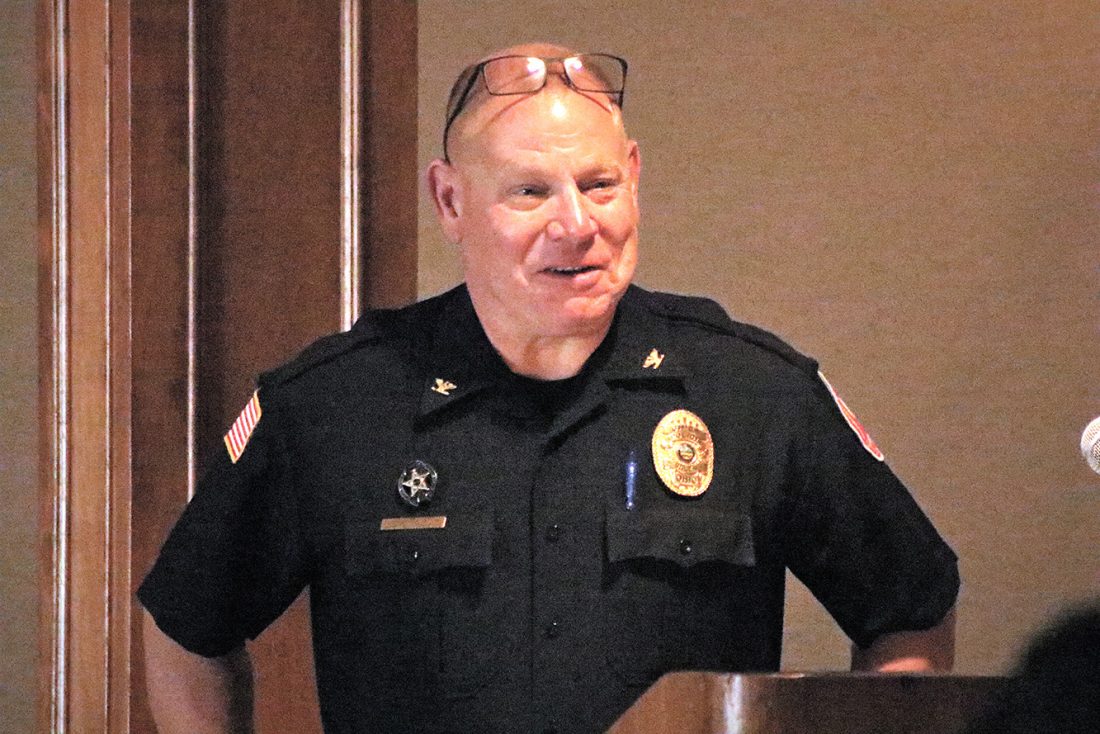
Salem police Chief J.T. Panezott spoke at the graduation event Friday from a week-long crisis intervention training program. (Salem News photo by Deanne Johnson)

Columbiana patrolman Richard Whitman, who serves as the Columbiana County’s CIT coordinator, was honored as the CIT Officer of the Year, an award presented by Marcy Patton (left), executive director of the Columbiana County Mental Health and Recovery Services Board. (Salem News photo by Deanne Johnson)
After training together all week, police officers, a dispatcher, a certified peer supporter and the CIT expansion coordinator were honored with a graduation ceremony at the Dutch Village Inn — Best Western Plus in Columbiana. (Front from left) Patricia Reynolds, CIT expansion coordinator; patrolman Jeff Wilson, Salineville; patrolman Vincent DeRose, Salem; patrolman Danny Wallace, Wellsville; patrolman Josh Jackson, St. Clair Township; Sgt. Brandon Smith, Salem; patrolman James Briggs, St. Clair Township; dispatcher Crystal Sicklesmith, county Sheriff’s Office; Nick Wade, certified peer supporter; (back from left) patrolman Mike Wirker, Salem; patrolman David Young, Salem; patrolman Matt Cochran, Salem; Sgt. Brandon Brown, county Sheriff’s Office; Sgt. Danny Green, Salem; deputy Brian Deack, county Sheriff’s Office; patrolman Vance Brothers, Salineville; patrolman Dakota Mitchell, Washingtonville; and patrolman John Shaughnessy, Wellsville. (Salem News photo by Deanne Johnson)
Salem police Chief J.T. Panezott spoke at the graduation event Friday from a week-long crisis intervention training program. (Salem News photo by Deanne Johnson)
Columbiana patrolman Richard Whitman, who serves as the Columbiana County’s CIT coordinator, was honored as the CIT Officer of the Year, an award presented by Marcy Patton (left), executive director of the Columbiana County Mental Health and Recovery Services Board. (Salem News photo by Deanne Johnson)
Trending
COLUMBIANA -- With so much focus on law enforcement right now and a push for additional training, officers and others from six departments in Columbiana County spent this week getting additional training on responding to crisis situations.
Through the Columbiana County Mental Health and Recovery Services Board, the National Alliance on Mental Illness and Crisis Intervention Team coordinator Richard Whitfield, the program gives police officers information about recognizing those people suffering with types of mental illness or drug addiction, domestic violence and human trafficking. It then provides them with tools to try to de-escalate a crisis situation.
Officers got a chance to hear from those recovering from substance abuse or other problems about their situations. They learned about identifying an autistic child, an elderly person with dementia or a veteran struggling to readjust to life outside the military.
Additionally, officers learn suicide prevention skills for others and officer self care because there are times a job in law enforcement can affect even the toughest person.
During his remarks Friday at the graduation ceremony following the week-long training program, Salem police Chief J.T. Panezott talked about how this past year has only made it more difficult to be a police officer. From concerns about doing the job during a pandemic to rioting and anti-police sentiments following the death of George Floyd, Panezott said he has never seen anything like the current work environment for police.
"Go home at night, hug your family and turn off the news," Panezott said. "There is nothing good on there right now."
Additionally, Panezott said the majority of police officers did not get into this line of work to shoot anyone, kill anyone or beat anyone, but because they care about their communities.
"I have faith that at some point everybody's going to wake up and say where are our police officers, the people who need us the most in the neighborhoods who don't have much are not going to get the protection right now because they are afraid… At some point people are going to say we want our police back."
Panezott said there are 321 million residents in the United States with 63 million law enforcement contacts per year. Of those there are 13 million arrests, during which police find they need to use force 882,000 times per year. Out of those about 1,000 people die on average, which Panezott points out is about .1 percent out of the times police use force.
He went on to note more die each year from medical malpractice.
"You're doing a good job," Panezott said. "Are you happy with that, that 1,000 people died. I'm not. That's why you're here, because you care. Because we can do better. We have to do better….That's why we train."
The CIT training program provides officers with an Ohio CIT certification and 40 hours of continued training. Marcy Patton, executive director at the county Mental Health and Recovery Services Board, pointed out that sending one or several officers from local departments especially the smaller ones puts a strain on manpower for the week. Departments were offered a $2,000 per officer stipend to hopefully cover the cost of overtime or part-time officers required to cover for them. In the end, she said she hopes what the officers have learned throughout the week was even more valuable to each community than the price stipend.
Among those training was a dispatcher with the sheriff's office Crystal Sicklesmith, who Patton said is going to help them create a similar program aimed at dispatchers, the ones who first answer the phone and need to determine what kinds of help the send. Additionally, Nick Wade, a certified peer supporter, attended this week's training. Patton said he will be involved in creating a crisis mobile support unit for the Salem area to assist officers during a crisis.
Currently, the county has a CIT grant, and the grant coordinator, Patricia Reynolds, also attended the training.
A Columbiana patrolman and detective, Whitfield also serves as the CIT coordinator for the county. He was honored Friday as the CIT Officer of the Year. Whitfield and Patton were there from the beginning, developing the first CIT training for the county. Patton said Whitfield has a passion for the training and how it can help prepare law enforcement officers for the variety of crises they may find in the field.