
Approach of Columbiana County Fair prompts memories of those past
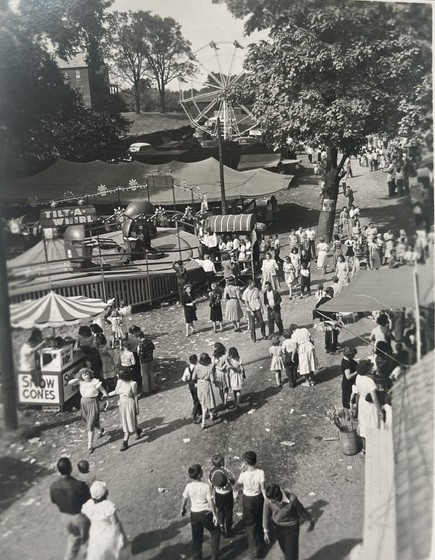
Midway 1948
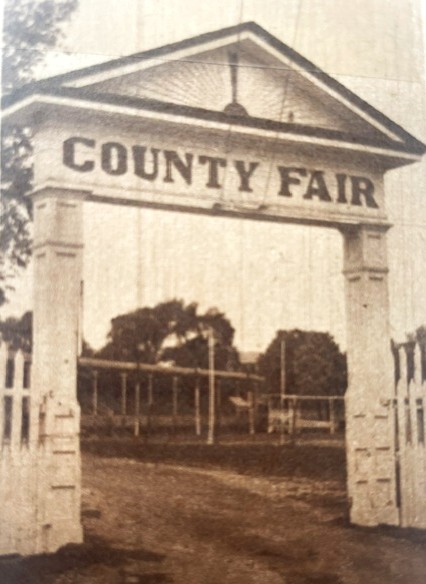
Main Gate 1945
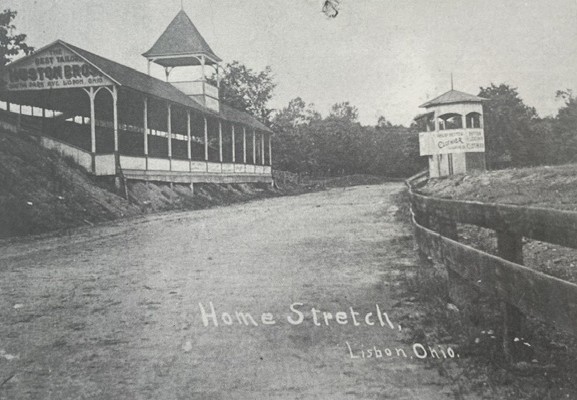
Grandstand circa 1900
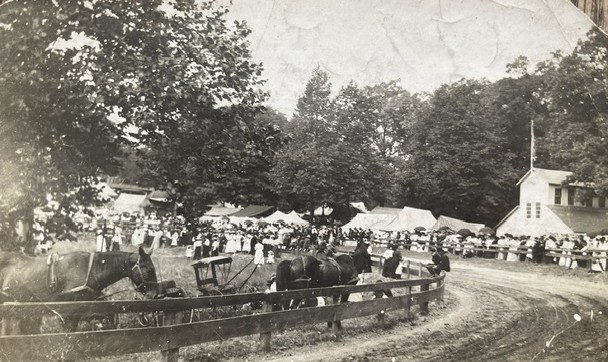
Fair 1909
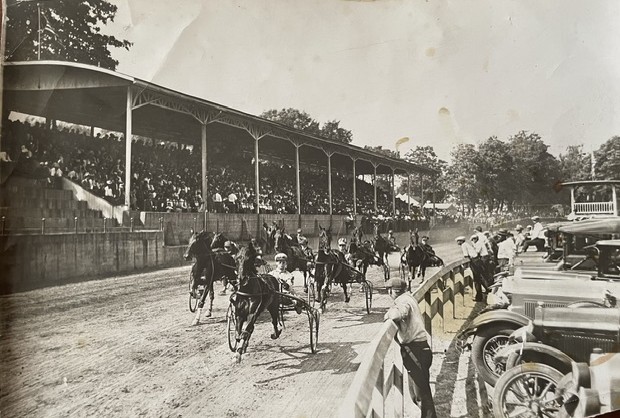
Sulky Races 1920s
Midway 1948
Main Gate 1945
Grandstand circa 1900
Fair 1909
Sulky Races 1920s
Trending
Sometime in the late 1830s or 1840s, an agricultural "fair was held on the site of a woolen mill on East Washington Street in Lisbon across the street from the R. Thomas & Sons plant. It was a small beginning to what would become a major annual event.
It wasn't until 1846 that a meeting was held to form the Columbiana County Agricultural Society. The society was reorganized in 1851 and in 1853 the society purchased the Seminary property north of New Lisbon. That property was, 15 acres and contained a grove of trees and "a strong and never failing spring of water. " It also contained some buildings and was purchased for $1,800. A building costing $400 was erected on the grounds and a fence surrounding the fairgrounds was installed at 55-cents a lineal rod. That year 1853, the first fair was held. The Rules and Regulations booklet for that first fair contained a plea to the public, especially farmers, to participate in the fair. It also asked "Manufacturers and Mechanics" to exhibit at the fair. It urged women to display handiwork, and it urged the public "bring something to the fair, if it should only be a big potato or a pumpkin--bring it along."
According to the Premiums and Regulations booklet for the 1854 fair that initial 1853 fair was "a perfect triumph" and the "Columbiana County Agricultural Society is a fixed fact -- firmly established -- depending upon no precarious tenure but destined to a long life of great usefulness to the Agriculturalist and Mechanic." The booklet also described the grounds as "not surpassed in the State" and noted that the ground and buildings were "complete and paid for last year." However, apparently not everyone was pleased about a county fair and the booklet addressed the "Objectors" in a full-page article. Some of the objections were that the fair was not free (admission was a dime), there was music on the grounds and "ladies" appeared on horseback. "You don't like the agricultural fair because it is a sin. This is an objection we cannot answer to your satisfaction; and the therefore, we will not make the effort."
Those early fairs had a huge number of categories of horses, livestock, garden products, flowers, needlecrafts, home products and more. In 1854 there was a category for best plowing with horses and one for best plowing with oxen.
The fair has been a staple of the county for many years. Now the 181st Columbiana County Fair is about to open prompting a lot of memories.
Here are a few of those memories:
Right before the grandstand show each evening, there was a livestock parade of ponies, horses, dairy and beef cattle. 4-Hers, FFAers, and adult exhibitors lined up with their animals and led or rode them around the racetrack. This was a treasured tradition that was so much fun! We dairy farm kids chose our most sedate mature cows who would parade in a queenly fashion. These well-trained "ladies" had "many years of experience at the fair.
The animals usually behaved well until they passed the grandstand. As they headed back toward the barns, however, they often became impatient and moved faster and faster. This was particularly difficult for the kids leading steers who were first timers at the fair. The 96-pound 12-year-old with a 1000-pound rambunctious steer faced quite a challenge -- sometimes those steers broke loose and left their frustrated young leadsmen behind. On these occasions, it seemed more like a rodeo than a parade!
-- Mary Miller VanBuren
When we were little, our parents always took us to the Columbiana County Fair on Saturday Night. That was the night of the Rodeo. My dad just loved watching it so we would walk around the fair looking at all the food and getting our rides in before the rodeo started.
When I joined the 4-H group, the Cloveretts, I always looked forward to the fair. We had a booth in the 4-H Building that we decorated the day before the fair opened. We would start preparing our design by making Kleenex roses. Hundreds of them that would be attached to chicken wire for the back of our booth. We displayed our projects in the booth along with the ribbons we earned for those projects.
On Friday night there was a 4-H talent show at the Grandstand. One year we participated in the show by dressing up like mountain people and singing "Wolverton Mountain." Charity Miller played the piano and I think she could play any song you gave her. She was great.
-- Patti Smith
My main territory was the one-lane paved midway that passed behind the grandstand. It was lined on both sides with enticements to spend money. One was a rotating display of colorful cheap prizes for anyone who could land a nickel to stick on one. I learned to bounce my nickels off one piece so they would land and stick on the next piece and went home with some ugly ceramic ashtrays. I also learned that the Tilt-A-Whirl made me nauseous. I especially liked listening to the merry-go-round calliope music. Another highlight was for us kids to run until we were worn out and then amble calmly into the health education tent to watch the reactions of the nurses whose job was to take our blood pressures and pulses.
-- Dave Bruey
I can remember Band Day. Back in the 1960s there was a special day for each band in the county. Lisbon Band Day was so much fun. We began at the High School and marched to the fairgrounds with a police escort! We opened the fair by marching down the midway. Then it was fun times enjoying the rides and 4-H exhibits. The band parents supplied lunch and then we got ready for the evening. We again marched down the midway, onto the track and performed in front of the grandstand. Great memories of our County Fair.
-- Diane Dull
My brothers and I couldn't believe our eyes. A Holstein heifer was jumping from pen to pen in the barn! Now this is very unusual because bovines don't routinely jump things. Being normal farm boys, we decided to exploit the situation -- so my younger brother Jim started riding the heifer as she jumped the gates that separated the pens.
When our father discovered this activity, we figured we would be in big trouble. But dad said we could continue outside in a safer setting. My brother Earl, young Jim and I used an old draft horse harness to fashion a belt around the heifer's middle behind her front legs. We fashioned a hand-hold on top for Jim to hang on to. We fitted a bridle on her with a bit in her mouth and proceeded to fine-tune her jumping skills.
We built a jump for the heifer from two vertical posts with brackets attached at varying heights. Slats could be moved up along the verticals as the heifer jumped higher and higher.
By fair time in 1948, we were ready to perform in public. Jim led the livestock parade riding the heifer and even performed in front of the grandstand. First, he had her stand on a wooden box and "shook hands" with her front hoof. Then he started jumping with the slats at a low level. As the slats gradually increased the height, folks speculated that she would not be able to jump that high--but Jim and his jumping heifer surprised them all. They were the hit of the show.
-- Bill McKarns
I remember sitting in the old Grandstand and when the crowd went wild the whole structure shook. And if it was raining, everyone got wet because of the holes in the roof.
-- Mike Lacey
In the 1950s, there were four ways to get into the fair, three official and one not so much. There was the lower gate near the stables and the main gate, both on Lee Avenue, the upper gate at the end of Prospect Street and a fence between that could be climbed with the hope of eluding watchful fair personnel. Also, local youth frequently "found" a hole in the fence that they could climb through. Word of the vulnerable spots in the fence spread quickly among the town youth. Town kids could also show a re-entry stamp on the back of our hands, which could be legit or counterfeited at home by carving a potato. Some kids would pool their money for one to pay for entrance and then an artistic youth would copy the entrance stamp onto other hands. Or, the legit stamp when dampened could duplicate when rolled against another hand. Sneaking into the fair was pretty much a town kids' activity because the farm kids got fair passes because of their projects.
-- Several Anonymous
In the 1910s, my family farmed the "Kenmuir Place" on Trinity Church Road near Dungannon and we would ride our wagon several miles for our day at the fair. One of my relatives, Ozzy Hill, sold farm implements and displayed them inside the ring of the racetrack. My extended family, that included the Hills and the Shives, would meet inside the ring for lunch that came from baskets of food that we brought from home. I remember getting a colorful balloon to take on the wagon ride home after a long day at the fair.
-- Helen Bruey as told to her son, Dave
This monthly column is provided by the Lisbon Historical Society. This submission was compiled by Gloria Tritten Mathews of the Lisbon Historical Society. Her email is hillcroft4@aol.com.