
Southern Local students learn the science of baking
Trending
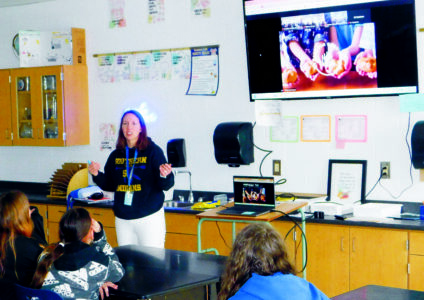
Amanda Wrobleski prepared her sixth-grade class at Southern Local Junior High School for a live, virtual demonstration of the steps needed to bake bread as part of the King Arthur Baking Co.'s Bake for Good program.
Amanda Wrobleski, their teacher, said materials for the bread were supplied, at no cost, by the King Arthur Baking Co. of Norwich, Vermont, which also provided a virtual instructor to direct the youth in putting all of it together to make two loaves of bread.
It's all part of the company's Bake for Good program, through which students are encouraged to bake one loaf at home for their family while giving the second to someone in their community.
On May 6, Wrobleski's students watched with classrooms elsewhere as a virtual instructor with the company walked them through the steps of preparing the bread from a Vermont kitchen.
Appearing live on their classroom's widescreen computer, she asked the students a few questions about their favorite foods before she demonstrated each phase, from mixing flour and other ingredients to kneading and shaping the dough into braided loaves.
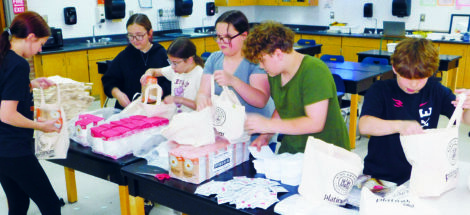
A printed recipe also was included in bags filled with packs of golden wheat flour, all-purpose flour, yeast and other materials that arrived a week earlier and were combined by several students under Wrobelski's direction.
Gluten-free flour also was sent to the school for those who are allergic to the substance, a protein used as a thickening agent in many breads and other food.
She noted the virtual instructor stresses the need for cleanliness, removing jewelry from one's hands and washing them before getting started; and the role of math and science when preparing food.
Wrobleski said the activity involved skills and knowledge in math, with fractions involved in measuring the flour and other ingredients, and science, with the virtual instructor explaining the role that chemical reactions play in the bread's preparation.
The virtual instructor noted yeast is a single cell living organism that is dormant until sugar dissolved in warm water is added, causing tiny bubbles of carbon dioxide to form and the dough to expand.
She also advised sugar also is responsible for the bread's outer coloring through a chemical process called caramelization.
The students were told that after removing the bread from the oven, they should allow it to cool for about 30 minutes as it's not fully cooked and they shouldn't place the loaf in a bag or other container immediately or they will cause water within it to condense.
The students were advised baking bread from scratch requires about three and a half hours but it's worth the time invested.
Among students watching the demonstration was Cash Buxton, who said he has baked croissants but never any baked good from scratch.
He was looking forward to baking a loaf for his dad, noting his paternal grandmother had owned and run a bakery.
A classmate, Autumn Larkins, said she will give a loaf to an aunt who has baked many things for her.
The King Arthur Baking Co. has established three basic goals for its Bake for Good program: Learn, Bake and Share.
While its young participants are expected to enjoy one loaf with their families, they are encouraged to share the second with someone in their community, including possibly someone experiencing difficult times.
Wrobleski the latter part involves yet another skill, as the students received instruction in writing a letter to the second loaf's recipient explaining the Bake for Good project and why they were chosen to receive the bread.
Noting it's the third year her classroom has participated, she recalled a former student who gave the second loaf to a local farmer for whom other family members had worked.